
Olmsted's Enduring Influence on High-End Residential Landscape Architecture
- Quiet Ink
- Dec 8, 2025
- 5 min read
Updated: Dec 11, 2025
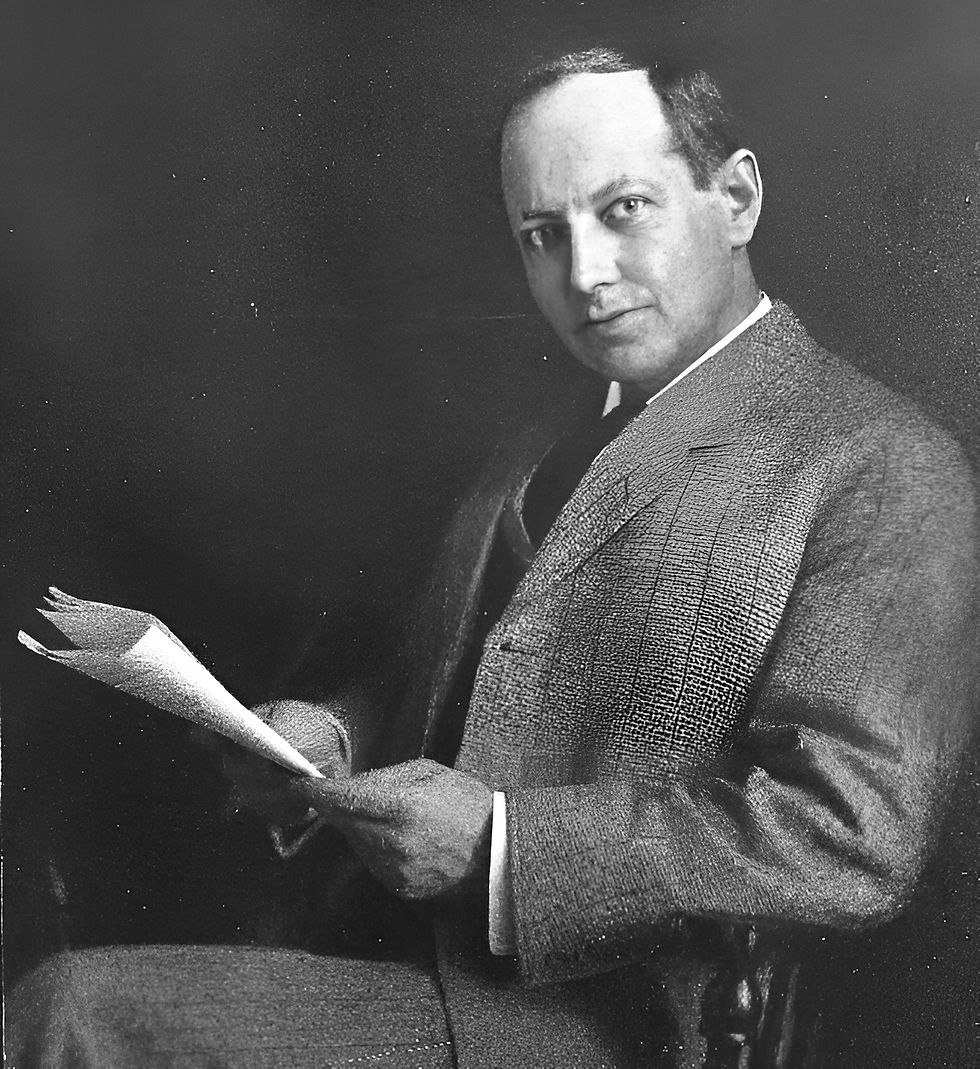
Frederick Law Olmsted transformed how Americans experience outdoor space. As the architect of Central Park, the grounds of the U.S. Capitol, and Boston's Emerald Necklace, Olmsted established landscape architecture as a distinct profession in the mid-nineteenth century. His work transcended ornamental gardening, addressing complex relationships between topography, circulation, ecology, and human experience. While his most celebrated projects were public commissions, the principles underlying his design philosophy remain profoundly relevant to contemporary high-end residential work. For landscape architects, architects, and discerning homeowners seeking timeless estate environments, Olmsted's approach offers both inspiration and practical methodology.
The Foundation: Olmsted's Design Philosophy
Olmsted believed landscape should serve psychological restoration. His designs created sanctuaries from urban intensity, orchestrating transitions from arrival through sequential spatial experiences. Central to his approach was the concept of spatial hierarchy—carefully structured progressions that reveal landscape incrementally rather than all at once. He shaped terrain to create natural-feeling enclosures and openings, understanding that grading drives both visual experience and functional performance.

His circulation strategies were equally deliberate. Olmsted designed paths that encouraged meandering exploration, separating pedestrian, equestrian, and vehicular movement to preserve the contemplative character of each journey. Curves followed topographic logic, creating the sensation that routes emerged organically from the land rather than being imposed upon it. This sensitivity extended to his planting approach, which emphasized naturalistic compositions over formal geometry. He layered canopy trees, understory species, and groundcovers to create depth and seasonal interest, studying how light filtered through foliage and how plant communities transitioned across ecological gradients.
Perhaps most remarkably for his era, Olmsted practiced what we now call ecological design. He worked with existing hydrology, preserved significant trees, and specified regionally adapted species. His grading plans managed stormwater through subtle swales and bioretention areas long before contemporary stormwater regulations existed. This integration of beauty, function, and environmental responsiveness established a standard that remains aspirational.
Translating Olmsted to the Modern Estate

High-end residential landscape architecture operates at a scale and intimacy that amplifies Olmsted's principles. The arrival sequence at a private estate demands the same careful choreography Olmsted brought to park entrances. A successful approach balances anticipation and privacy, using landform, tree masses, and strategic screening to gradually reveal the residence. Gates and entry courts function as thresholds, marking transitions from public to private realm. The drive itself becomes an experience—curved to follow natural contours, edged with layered plantings that shift in character as one moves through the property.
Within the estate grounds, spatial hierarchy creates distinct outdoor rooms. Formal terraces immediately adjacent to architecture give way to transitional lawn panels, which dissolve into naturalistic woodland edges. This progression from refined to relaxed mirrors Olmsted's park planning, where groomed meadows transitioned to wilder rambles. Each zone serves specific functions—entertaining, recreation, contemplation—while contributing to a coherent whole.

Curated views and vistas remain essential. Olmsted understood that landscape reveals its power through selective framing. In residential work, this translates to identifying key sightlines from principal rooms, terraces, and circulation paths. Landform manipulation and strategic tree placement direct the eye toward carefully composed prospects while screening undesirable views. A mature specimen tree positioned to terminate a lawn vista, a carefully graded slope that reveals distant hills from the primary terrace, a woodland path that opens onto a meadow clearing—these techniques create memorable moments that define a property's character.

The naturalistic planting approach Olmsted pioneered finds perhaps its fullest expression in residential landscapes. Estate-level properties allow for extensive plant palettes that respond to site microclimates and create seasonal narratives.
Understory layers beneath established tree canopies provide year-round structure. Perennial meadows soften edges between mown lawn and woodland. Native species selections support local ecology while reducing long-term maintenance intensity. This layered approach delivers both immediate impact and increasing richness as plantings mature.
Planning and Construction: The Olmstedian Process
Olmsted's influence extends beyond aesthetic principles into the fundamental planning and construction processes that realize complex landscape projects. His collaborative approach, working closely with architects, engineers, and skilled craftspeople, established the multidisciplinary framework essential to contemporary estate work.
Grading strategy forms the foundation of this process. Olmsted's projects involved massive earthwork operations that shaped topography to achieve both functional and experiential goals. In modern residential practice, comprehensive grading plans integrate drainage management, accessibility requirements, and spatial definition. Retaining walls become sculptural elements that mediate grade changes while creating planting opportunities. Subtle berms screen service areas and shape circulation corridors. The interplay between cut and fill balances earthwork quantities while establishing the armature for all subsequent design layers.

Hydrology considerations demand similar rigor. Olmsted's integration of functional drainage into designed landscape remains instructive. Contemporary estate projects must address stormwater regulations while maintaining aesthetic refinement. Bioswales follow the gentle curves of naturalistic drainage patterns. Rain gardens occupy strategic low points in the landform. Permeable paving systems serve functional areas without compromising design intent. This integration requires close coordination among landscape architects, civil engineers, and contractors throughout design development and construction.
Material selection reflects Olmsted's attention to longevity and appropriateness. His preference for durable, regionally sourced stone and wood established quality standards for built landscape elements. In high-end residential work, this translates to specifying materials that will weather gracefully, selecting stone varieties that complement local geology, detailing wood structures for maximum durability, and avoiding trendy materials unlikely to age well. The goal is creating landscapes that improve over time rather than deteriorate.
The Botanique + Design Connection
These Olmstedian principles directly inform the practice of thoughtful residential landscape architecture. Comprehensive site planning begins with understanding existing conditions—topography, hydrology, vegetation, views, and microclimates—then develops interventions that enhance rather than override these characteristics. Master planning establishes spatial frameworks that accommodate immediate program needs while anticipating long-term evolution.

Design development translates conceptual frameworks into buildable reality through detailed designs, planting specifications, and specification documentation. This phase demands the same collaborative rigor Olmsted practiced, coordinating closely with architects to ensure landscape and building form a coherent composition, working with civil engineers to integrate infrastructure elegantly, and partnering with skilled contractors who understand craftsmanship standards.
The commitment to long-term stewardship extends Olmsted's vision. Landscapes require years to reach maturity. Thoughtful designers specify plants sized appropriately for their ultimate scale, detail irrigation systems that support establishment then reduce inputs, and provide maintenance guidelines that preserve design intent. The most successful projects improve continuously as trees mature, perennials fill in, and spatial relationships strengthen.
Looking Forward: Olmsted's Legacy in Contemporary Practice

Olmsted's philosophies align remarkably well with evolving priorities in high-end residential design. Sustainability concerns he pioneered—working with natural systems, specifying adapted plants, managing water thoughtfully—have become essential rather than optional.
His emphasis on psychological restoration resonates with contemporary wellness-driven design approaches that position outdoor environments as health assets. The experiential richness his projects delivered speaks to clients seeking meaningful engagement with their properties rather than mere visual display.
Perhaps most importantly, Olmsted demonstrated that landscape architecture operates at the intersection of art, science, and craft. This integration distinguishes thoughtful estate design from superficial decoration. As residential properties become more complex—incorporating extensive outdoor living spaces, sustainable infrastructure, and sophisticated horticultural displays—the need for comprehensive design thinking intensifies.
The father of American landscape architecture left principles rather than formulas, approaches rather than templates. His legacy encourages contemporary practitioners to study site conditions rigorously, design with long-term vision, collaborate across disciplines, and create landscapes that serve both immediate function and enduring beauty. For those pursuing excellence in residential landscape architecture, Olmsted remains not historical footnote but active inspiration.


